


Damascus, SANA- Idlib Governorate, situated in northwestern Syria, is a region of immense archaeological significance, bearing witness to a rich tapestry of human history spanning millennia.
Its fertile plains and strategic location at the crossroads of ancient civilizations have made it a cradle of cultural exchange and development.
Idlib’s archaeological wealth is a testament to its role as a crossroads of civilizations. The region is home to over 1,000 documented sites. These sites include ancient cities, tells (mounds), tombs, churches, monasteries, and the renowned “Dead Cities” or “Forgotten Cities,” a collection of approximately 700 abandoned settlements dating from the 1st to 7th centuries CE, recognized by UNESCO as a World Heritage Site in 2011.
A deeper dive into the most prominent archaeological sites of Idlib Governorate:
- The Ancient City of Ebla: A Powerhouse of the Bronze Age
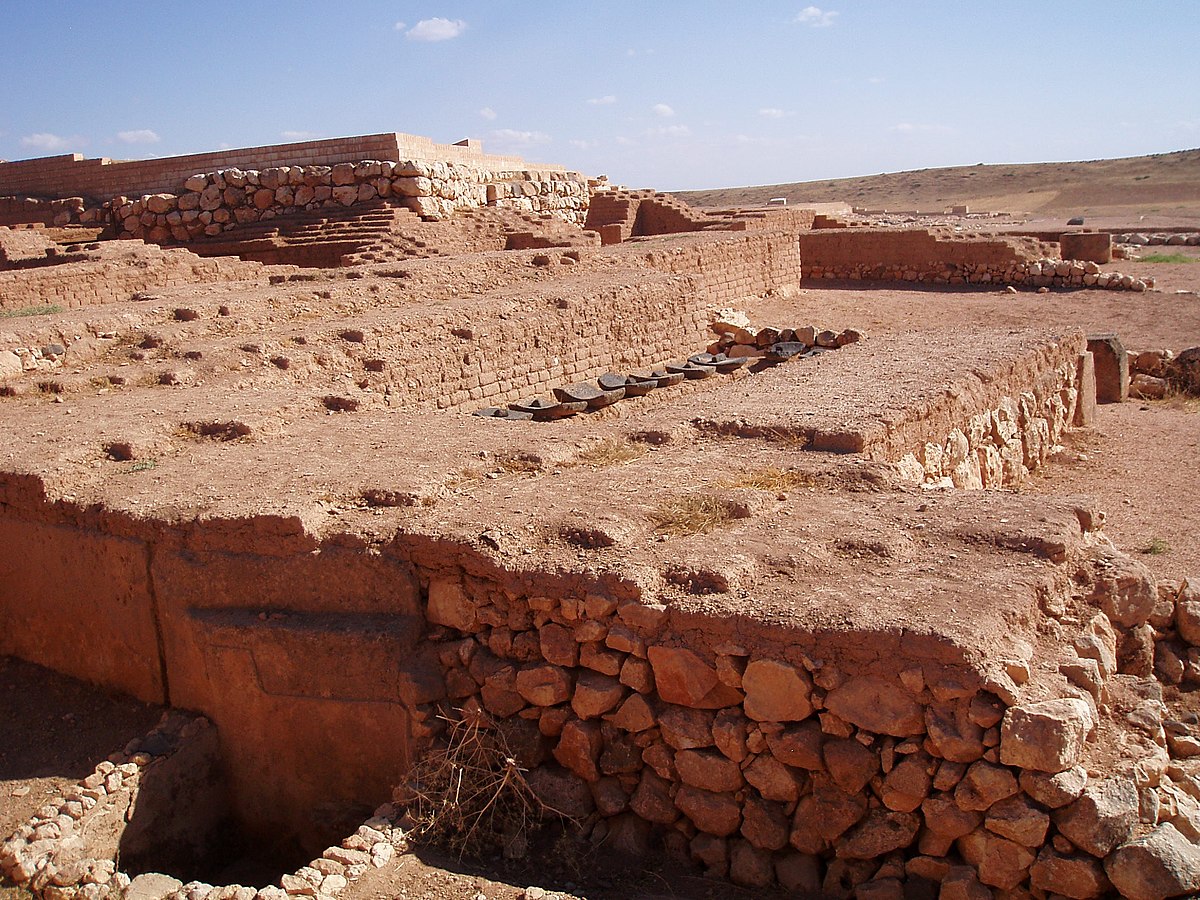
Ebla stands as one of the most significant archaeological discoveries of the 20th century. Flourishing during the 3rd millennium BC, this once-powerful city-state rivaled even the might of Mesopotamia and Egypt. Its rediscovery in the 1960s revolutionized our understanding of the ancient Near East.
Ebla’s importance lies in its remarkably well-preserved archives, containing thousands of clay tablets inscribed with cuneiform script.
These tablets offer invaluable insights into Eblaite society, including its political structure, economic activities, religious beliefs, and international relations. The texts reveal a sophisticated urban center with a complex administration and a thriving trade network that extended across the region.
Among the most impressive structures unearthed at Ebla are the Royal Palace, a testament to the city’s power and wealth; the temples dedicated to various deities, revealing aspects of Eblaite religious practices; and the extensive library, which housed the invaluable cuneiform archives. The city’s fortifications also attest to its strategic importance and the turbulent times in which it existed.
- Tell Mardikh: The Precursor to the Great City of Ebla
Located near Ebla, Tell Mardikh is often considered the precursor to its more famous neighbour. While overshadowed by Ebla’s prominence, Tell Mardikh also holds significant archaeological value, offering a glimpse into the earlier phases of settlement in the region. Excavations have revealed evidence of occupation dating back to the Chalcolithic period, providing a crucial link in understanding the development of urban centers in the area.
Tell Mardikh’s importance lies in its stratigraphic sequence, which allows archaeologists to trace the evolution of the site over time. The findings here help contextualize Ebla’s rise to power and shed light on the cultural and economic transformations that led to the emergence of this major city-state.
Tell Mardikh reveals evidence of early urban planning, including fortifications and domestic structures. Artifacts discovered at the site, such as pottery and tools, provide insights into the daily life of its inhabitants.

- The Dead Cities (Forgotten Cities): A Chapter from the History of Syrian Civilization
Spread across Idlib and parts of Aleppo Governorate, the Dead Cities are a group of 40 villages organized into eight archaeological parks. These settlements, inhabited from the 1st to 7th centuries CE, were abandoned between the 8th and 10th centuries, leaving behind remarkably preserved structures such as houses, churches, bathhouses, and olive presses.
- Other Notable Sites in Idlib Governorate:
Beyond Ebla, Tell Mardikh and the D, Idlib Governorate boasts numerous other archaeological sites, each contributing to our understanding of the region’s past. These include:
* Ancient Settlements and Tells (mounds): Prehistoric and Bronze Age mounds offering insights into early settlement patterns scattered throughout the governorate testify to a long history of human habitation. These sites often reveal evidence of agricultural practices, trade networks, and local cultural traditions. Some of these mounds are Tell Afis, Tell El-Kerkh, and Tell al-Mastuma.

* Byzantine and Early Islamic Sites: The region also bears witness to the influence of later empires, with remnants of Byzantine churches, monasteries, and fortifications, as well as early Islamic settlements and mosques. These sites reflect the transition from the classical to the medieval period and the spread of Islam in the region.
* The Castles: The strategic importance of Idlib Governorate also led to the construction of castles during the medieval period, such as the castle of Harem.
* Ain Dara: A neo-Hittite temple north of St. Simeon’s, famed for its giant basalt lion statue, a symbol of the fertility goddess Ishtar, until its looting in 2019.
* Maarat al-Numan Museum: Housing the Middle East’s second-largest mosaic collection, this museum reflects Idlib’s Roman and Byzantine legacy.
Spanning a history that stretches from prehistory through the Bronze Age, Roman, Byzantine, and Islamic periods, Idlib’s archaeological landscape offers a window into the cultural and historical evolution of the Near East.

Ruaa al-Jazaeri


